Finding relevant prior art is one of the most time-consuming tasks in patent work. Traditional keyword-based searches require you to guess the exact terminology used in patent documents — which varies wildly across jurisdictions and time periods.
The problem with keyword search
Consider a simple invention: a “foldable phone screen.” Depending on when and where the patent was filed, you might find it described as:
- Flexible display device
- Bendable screen apparatus
- Collapsible electronic display
- Hinged mobile terminal with deformable panel
A keyword search for “foldable phone screen” would miss most of these.
How semantic search works
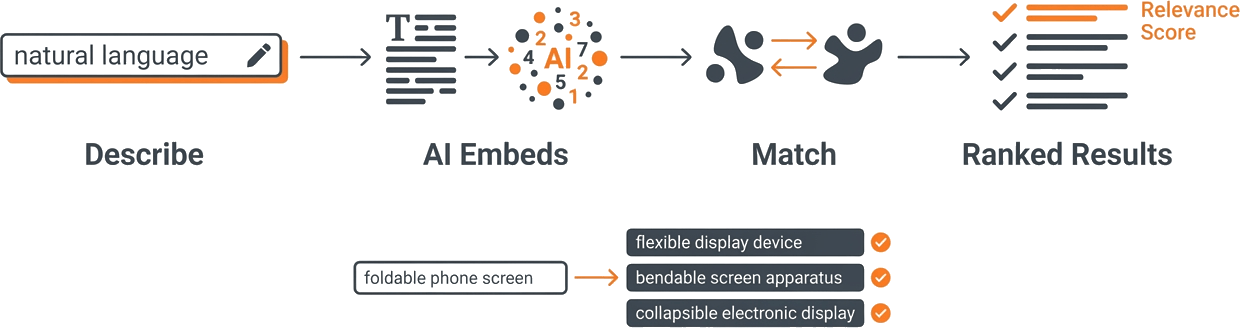
GoVeda’s semantic search understands the meaning behind your query, not just the words. When you search for “foldable phone screen,” our AI models identify patents about flexible displays regardless of the specific terminology used.
Step-by-step guide
- Go to the home page and make sure the input is set to Search mode (not Report mode)
- Enter a natural language description of your invention in the search input
- Press Enter or click the orange arrow button and review the ranked results
Results are ranked by semantic similarity to your query. Open any result in the Patent Viewer to see the full patent details and AI-generated summary.
Tips for better results
- Be specific: “Foldable OLED display with crease-resistant hinge mechanism” outperforms “foldable screen”
- Include technical details: Mention materials, mechanisms, or processes
- Try multiple angles: Search from both the problem and solution perspectives
Ready to try it? Start your first search →
Disclaimer: Search results provided by GoVeda are for informational purposes only and do not constitute legal advice. Semantic search may not identify all relevant prior art — consult qualified patent counsel before making patentability or freedom-to-operate decisions.